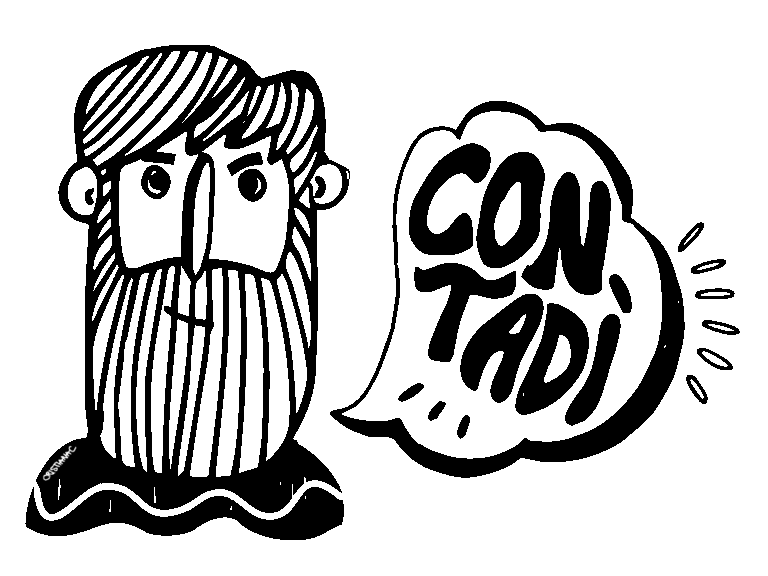
Lu Contadì: The Lord of the Fields
Lu Contadì is a figure that, for those living in the Marche region, immediately evokes a very specific image: the country man, the farm laborer, but also the head of the family who upholds centuries-old traditions. He is not just a simple farmer, but a true “lord” of the fields, who skillfully manages both his land and his family.
If Vergara (whom we discussed in another article) is the lady of the hearth, lu Contadì is the king of the fields. He was the one who worked the land, took care of the animals, and provided financially for the family. But beware, his role was not simply one of physical labor: he was the one who decided how and when to sow, how to store the harvest, and often also took care of selling the products.
Even though Vergara managed the family budget and the household affairs, the Contadì was the central figure in the relationship with the land and its resources. His work was the beating heart of the rural economy and the family’s survival.
‘Contadì’ from contado, which comes through Provençal comtat from the Latin comitatus, which in the Middle Ages took the meaning of ‘a count’s fief.’ The peasant – noun, adjective – was born in contrast to the ‘citizen.’ It referred to the inhabitant of the contado. In fact, the modern term ‘committee’ also derives from this word, and it’s not hard to see why: ‘count’ comes from the Latin comes comitis, which originally meant ‘companion, associate,’ and in the late imperial period became the title of high court officials.
In its Marche dialect form, lu Contadì takes on a nuance of respect and recognition, representing someone who has a visceral connection to the land, not just through work, but through identity. A true character, a type of Marche personality, is someone who works the land and, in some way, is shaped by the land itself.
Lu Contadì is not just a worker of the land; he is a symbol of rooted values: family, sacrifice, patience. He is the one who rises at dawn to tend the fields, but also the one who sits at the table in the evening with the satisfied smile of someone who has built something with his own hands. His figure is often linked to popular wisdom, made up of proverbs, sayings, and traditions passed down orally from generation to generation.
Today, Lu Contadì is no longer just a man of the countryside, but a figure that embodies the fusion of tradition and modernity. After all, Lu Contadì lives in each of us, whether we were born in the Marche region or not. He is the symbol of those who never give up, of those who build with patience, of those who never forget where they come from.