The Marchigian Woman Who Rules (with Style)
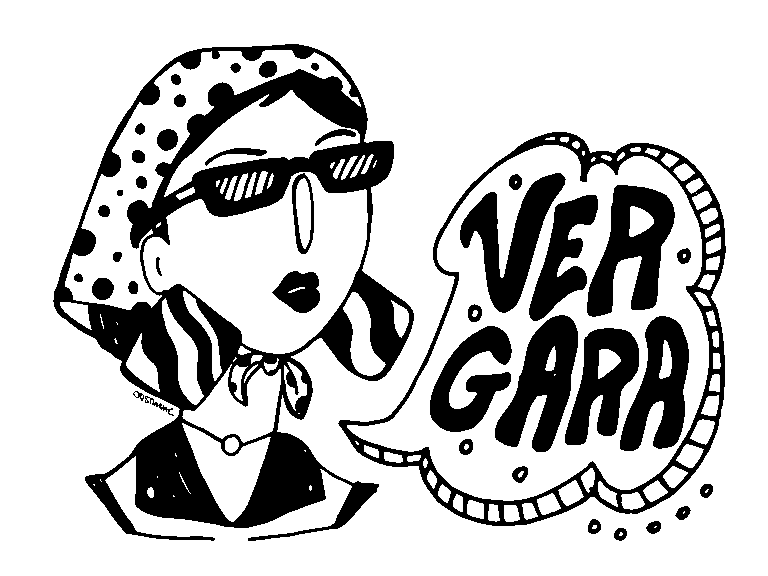
It’s not just a legendary figure, but a true institution in the valleys of the Marche: an irresistible mix of authority, wisdom, and charisma. But who was — and who is — really la Vergara? And why does the sound of the word, especially in the Maceratese dialect, feel so powerful?
Etymology of the Word Vergara: “A Matter of Power”
The term probably derives from “verga” (or Latin vervecarius “shepherd”, from vervex -ēcis “ram”). In the Maremma area and central Italian regions, the masculine “vergaro” (or “vergàio”) was common, referring to “the one who tends the flock.” But in the Marche, Vergara took on a much deeper and complex meaning: the Vergara was the woman at the head of the management of Marchigian peasant families between the late 19th and early 20th centuries.
La Vergara was the true strength of the peasant family. If the husband, lo Contadì, brought home the money, it was she who managed everything: from finances to provisions for self-consumption, from household decisions to choices about the family’s future. In a society where the system was essentially matriarchal, the Vergara not only ran the household but determined every practical and logistical aspect of daily life. Her role was central: in addition to managing the family income, she was responsible for producing essential goods such as food, clothing, and linen, ensuring the family’s self-sufficiency. She decided everything, without needing anyone’s approval.
She can be seen as a symbol of a woman who not only manages but leads with relentless determination. In the contemporary world, we talk about “managers” — well, in the Marche, this role has existed for centuries, and she embodies it: the Vergara.
In the Maceratese dialect, this term takes on a special, almost solemn sound. When you hear it spoken, it feels like a declaration of power: “la Vergara.” It doesn’t refer merely to a woman running a household, but to a true leader who keeps everything under control with her natural charisma. Her presence is so strong that even lo Contadì often bows to her judgment.
And beware, don’t make a mistake! The Vergara isn’t afraid to raise her finger and speak her mind. Her scoldings are famous, often accompanied by typical phrases like: “Ma come te si ‘rvistita?” (literally, “how are you dressed?”), a sentence capable of undoing even the most fashionable outfit.
*Historical-Folklore Curiosity:
An ancient tradition saw, on the occasion of a wedding, the mother-in-law welcoming the vergara (new bride) into her home and offering her three symbolic objects: a “conocchia” (spindle), a piece of bread, and three grains of coarse salt to symbolize the “virtues” the woman should possess. The spindle represented skill in spinning and weaving, the bread represented cooking, and the three grains of salt indicated she should always act “cum grano salis” (with common sense). After presenting these gifts, the mother-in-law addressed the daughter-in-law: “Fija in questa cassa c’è la pace” (“Daughter, in this house there is peace”), to which she replied: “Se ce la troo ce la lascio” (“If it is true, I will make sure to keep it”).
The Contemporary Vergara Between Tradition and Modernity
In an era where everyone talks about female empowerment, Marchigian women know that the concept has been rooted in their traditions for generations. Today’s Vergara is a woman who balances modernity with respect for her roots. She can manage a career, a family, and even social relationships with innate elegance, always with that touch of pragmatism unique to Marchigian life.
For further insights on the figure of the Vergara and the Marchigian Woman, we recommend: Visit the link
Angeletti C., La Vergara. Folkloric digression on the ‘woman manager’ of a hundred years ago, SICO Editore 1995. View PDF